
Decorative Stanchions for Historic, Heritage and Museum Properties
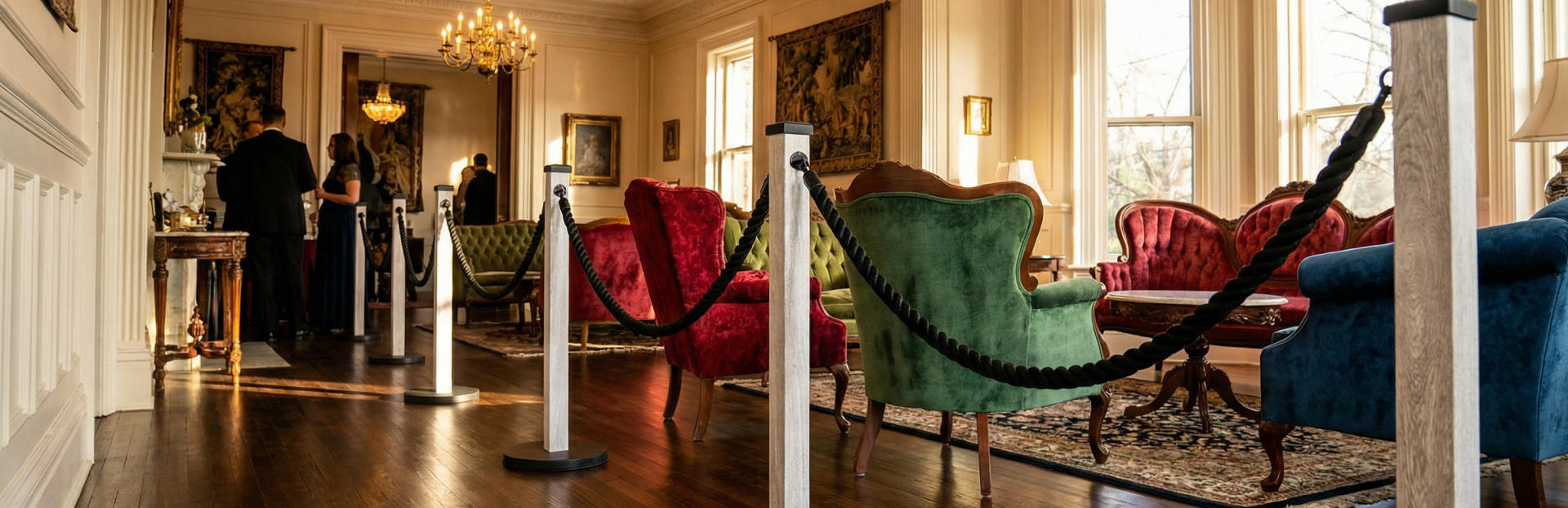
Historic buildings, museums, heritage sites, National and State Parks, restored downtown districts and cultural attractions often work to preserve a specific architectural character. Crowd control equipment used in these environments should provide the required visitor guidance and property protection without conflicting with the surrounding wood, stone, brick, iron, exhibits or landscape.
Stanchion Masters® wood-grain and decorative post and rope systems provide an alternative to polished stainless steel, chrome, polished brass and black retractable stanchions when those modern finishes are not appropriate for the setting. Faux wood, WPC, matte black and other coordinated finishes can be selected for historic, antique, rustic, western, natural and heritage-style properties.
Preserving the Architectural Character of the Property
Contemporary polished metal and retractable belt stanchions remain practical choices for many modern commercial interiors. Historic and heritage properties often require a different appearance.
A highly reflective chrome or polished brass post can look out of place beside aged timber, stone walls, brick walkways, historic furnishings, western architecture or natural park surroundings. Decorative post and rope systems can perform the same basic functions while better complementing the visual character of the property.
Stanchions do not preserve a historic building by themselves. They can, however, help establish boundaries, reduce unnecessary contact with fragile areas, organize visitors and direct pedestrian traffic away from restricted or sensitive locations.
Post and Rope Systems for Museums
Museums use stanchions to protect exhibits, define viewing distances, direct visitors, organize admission areas and restrict access to displays or rooms. The appropriate finish depends on the subject of the exhibit and the surrounding interior.
A modern art museum may require a simple architectural finish, while a railroad museum, historic home, western museum, maritime exhibit or living-history property may be better served by faux wood posts, natural-color rope and darker hardware.
Decorative stanchions can be used in:
- History museums and cultural museums
- Historic homes and preserved estates
- Railroad, transportation and industrial museums
- Military museums, forts and memorial properties
- Maritime museums and lighthouse properties
- Western, mining and pioneer museums
- Living-history museums and reconstructed villages
- Temporary exhibits and traveling displays
- Museum entrances, ticket counters and guided-tour areas
Historic and Heritage Property Applications
Decorative stanchions can be used wherever visitors must be guided, separated from restricted areas or kept at a reasonable distance from historic features. Common applications include:
- Historic buildings and restored public properties
- Heritage sites and archaeological attractions
- Historic hotels, inns and lodges
- Courthouses, city halls and government buildings
- Historic theaters and performance venues
- Railroad depots and heritage railways
- National Park and State Park visitor facilities
- Historic Main Streets and restored downtown districts
- Western towns, mining towns and pioneer attractions
- Wineries, breweries and distilleries in historic buildings
- Historic churches, missions and religious properties
- Botanical gardens, estates and cultural landscapes
- Visitor centers, gift shops and interpretive facilities
How Decorative Stanchions Are Used
Historic, museum and heritage properties may use post and rope systems to:
- Protect artifacts, furnishings, architectural details and exhibits
- Establish viewing boundaries around fragile or restricted areas
- Guide visitors through exhibits, tours and interpretive spaces
- Organize entrances, ticketing areas and waiting lines
- Separate pedestrian routes from restoration or maintenance work
- Restrict access to stairways, rooms, walkways or outdoor structures
- Support directional, informational and restricted-access signs
- Create temporary boundaries without installing permanent railings
Stanchions should be positioned carefully and used as part of an overall site-management plan. They are visual and physical guidance devices, not security barriers or replacements for required structural railings.
Wood-Grain Appearance Without Exposed Wood Posts
Stanchion Masters® decorative posts should not be confused with unfinished solid-wood posts. Depending on the selected model, the structural post may be aluminum or wood-plastic composite, combined with coated metal base components and a decorative wood-grain appearance.
This construction provides the visual character of wood while allowing the post, base, cover, rope and hardware to be selected according to the expected use and environment.
Available appearances can complement:
- Dark stained wood and traditional interiors
- Weathered, reclaimed and driftwood-style settings
- Rustic lodges and mountain properties
- Western, ranch and agricultural themes
- Coastal, maritime and nautical properties
- Historic brick, stone and timber construction
- Natural park and garden environments
Indoor and Outdoor Historic Properties
Decorative stanchion systems can be configured for indoor or outdoor commercial use. Outdoor installations require additional consideration because exposure differs substantially between locations.
Important conditions include:
- Rain, snow and freezing temperatures
- Desert heat and prolonged sunlight
- Coastal salt air and wind-driven moisture
- Pool chemicals and wet walking surfaces
- Irrigation, sprinklers and standing water
- Frequent movement by employees or visitors
- Permanent placement versus temporary seasonal use
The post finish, base coating, base cover, rope material and hardware should be selected for the expected exposure. Outdoor suitability does not mean that a stanchion is maintenance-free, damage-proof or appropriate for every climate without proper configuration and care.
Benefits of Stanchion Masters® Decorative Systems
- Architectural compatibility: Faux wood and subdued decorative finishes can complement historic, rustic and natural surroundings more appropriately than highly reflective modern finishes.
- Commercial construction: Available systems use aluminum or WPC posts with coated metal base components rather than relying on unfinished decorative wood alone.
- Indoor and outdoor options: Components can be selected according to the intended environment, exposure and handling frequency.
- Application flexibility: Systems can guide visitors, protect displays, establish boundaries and support informational signs.
- Coordinated components: Posts, ropes, hardware, base covers and signs can be selected as a complete system.
- Replaceable components: Individual ropes, hardware and other parts can be serviced or replaced without necessarily replacing the entire system.
Creating a Consistent Appearance
Historic districts, museums, parks and public properties may have multiple departments, tenants, vendors or businesses purchasing crowd control equipment independently. This can result in a mixture of traffic cones, plastic chains, retractable belts, temporary fencing and unrelated post styles.
A coordinated post and rope standard can provide a more consistent appearance across entrances, exhibits, walkways, visitor centers, restaurants, shops and restricted areas. The selected system should reflect the property’s architecture while still meeting its operational requirements.
This is especially useful for:
- Historic downtown districts with design guidelines
- Museum campuses with multiple buildings
- National and State Park visitor facilities
- Historic resorts and hospitality properties
- Living-history sites with multiple attractions
- Shopping and dining districts in restored buildings
- Public properties with indoor and outdoor visitor areas
Selecting the Right Configuration
Begin with the property style, installation location and intended use. A museum exhibit that remains indoors requires a different configuration than a frequently moved outdoor system at a coastal visitor center.
When requesting a recommendation or quote, provide:
- The type of historic, heritage or museum property
- Indoor or outdoor placement
- Expected climate and exposure
- Proximity to pools, salt water or irrigation
- How often the posts and ropes will be moved
- The surrounding wood, stone, brick, metal or architectural finishes
- The approximate number of posts and rope spans required
- Any sign-holder or directional-sign requirements
The post, base, rope and hardware should be selected as one coordinated system rather than choosing the post appearance alone.
Need decorative stanchions for a historic building, museum, heritage property or park?
Call 702-706-7047 or contact Stanchion Masters® with your property type, intended use and environmental conditions.